

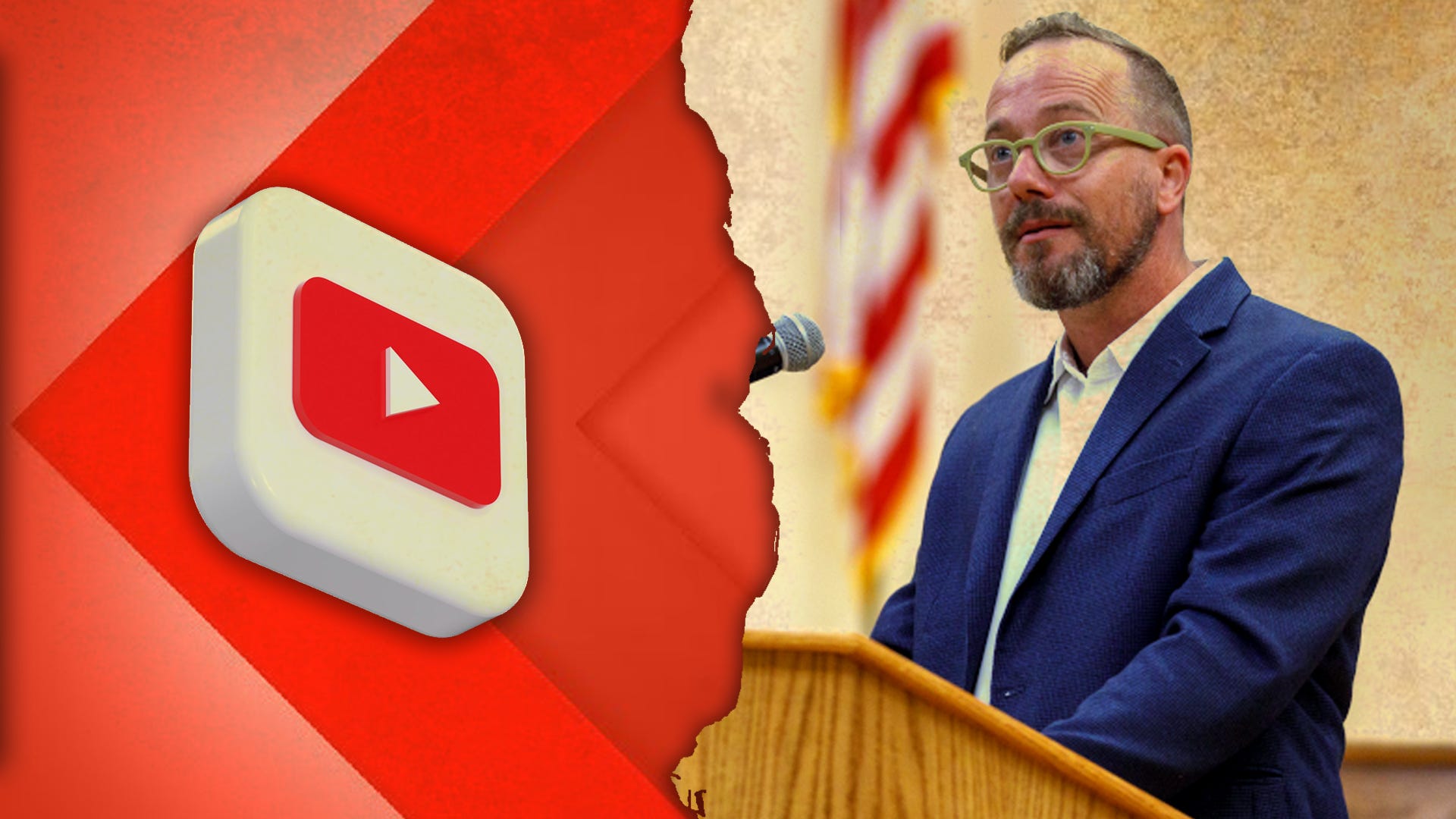
Have you heard the news? Matt Fradd will be joining The Daily Wire—and lots of people have opinions.
It’s almost too perfect: a Catholic influencer, freshly polished by YouTube apologetics, stepping into the conservative media machine right before the holidays, just in time for Catholic families everywhere to rehearse their annual debates over “what’s gone wrong with the culture. ” Every year, people ask how to have a civil conversation with family across political lines. And every year, the same type of articles roll out on Catholic media—“How disagreement wounds the body of Christ,” or “What both sides get wrong.”
Personally when it comes to politics, I just want my tax money helping the poor, feeding the hungry, housing the stranger. You know, the stuff Jesus thought was important.
But, that’s not the messaging that gets airtime. The loudest Catholic voices in America aren’t preaching the beatitudes; they’re fighting for engagement metrics and pushing “culture war” talking points. There have been other high profile Catholics (or Catholic converts) before, including Daily Wire alum Candace Owens and Matt Walsh. You could probably even include the patron saint of reinvention himself, JD Vance. But Fradd’s Daily Wire moment is less about the faith itself and more about his perceived ascension out of the little pond of Catholic media into the bigger far-right media ecosystem (“mainstream media!”).
I wouldn’t call him a philosopher. Matt Fradd has made a career out of sounding profound while saying very little of substance—his Australian accent and smile doing much of the heavy lifting. Let’s just say that if Fradd were a priest, Fr. Mike Schmitz and all his charm would be out of a job. But Fradd isn’t a priest; he’s a salesman. His brand is tailor-made for that elusive “young male Catholic” demographic—slick video production, doctrinally “correct,” and deeply online.
Related: check out The Catholic Masculinity series, which I wrote with Emma Cieslik, exploring how conservative and far-right media pipelines target young men searching for purpose and belonging.
Fradd’s show, Pints with Aquinas, pairs one of the Church’s favorite saintly intellectuals with the favorite pastime of many Catholic men: pretending to think deeply over a beer.
The concept is clever, sure. But beneath Fradd’s charm, his conservative sponsorships, and shiny video production, there’s a version of Catholicism that’s less about love of neighbor and more about “winning.” The same crowd that cheers Fradd on is the one that rolled its eyes at Pope Francis—even if they did pay him lip service every now and then.
Fradd represents an example of fundamentalism presenting itself as mainstream Catholic identity. JD Vance tried this only to be publicly corrected by Pope Francis on social media, which feels like it would be pretty embarrassing but I’m not sure that folks like Vance have that much shame to begin with. If you don’t want to welcome the neighbor, feed the hungry, or clothe the stranger, then you are refusing to embody the truth of the church.
Much of Fradd’s material contains dehumanizing conversations, where the lives of real people become theoretical talking points because Fradd is not a vulnerable minority. It’s very reminiscent of Charlie Kirk, who “debated” frequently on topics that didn’t affect his life and ignored the realities faced by people he demonized.
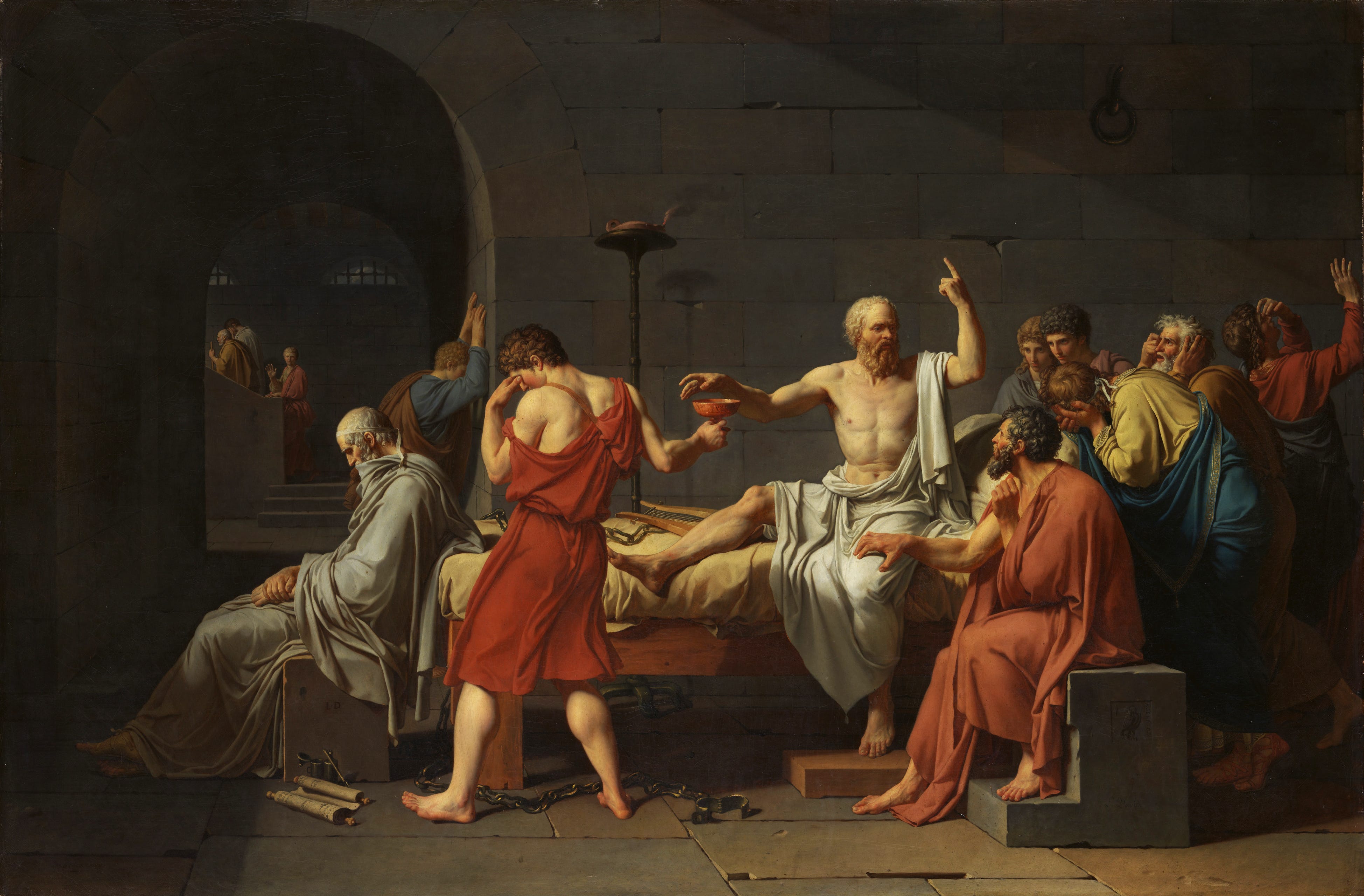
As it turns out, Thomas Aquinas is famous for “Christianizing” Greek philosophy—specifically Aristotle’s. That’s where things get funny, because naming your show after the guy who borrowed his best material is a pretty incredible self-own.
Aquinas wasn’t an originator so much as a synthesizer. Aristotle’s philosophy centered on reason, observation, and the pursuit of eudaimonia—human flourishing achieved through virtue. Aquinas took that structure and reoriented it toward God. Where Aristotle said our ultimate purpose was to live well in accordance with reason, Aquinas said our purpose was supernatural: to unite with God. Aristotle’s God was a distant “prime mover,” the cosmic starter who doesn’t return your calls; Aquinas’s God was personal, relational, and deeply invested in your moral life.
That’s not a small difference. Aristotle’s ethics were built on the natural world; Aquinas built a ladder from it straight to heaven. Reason was good, but only revelation could get you the full picture. Aristotle’s philosophy was about forming good citizens; Aquinas’s became about forming good souls.
And that’s what makes the “Pints with Aquinas” concept somewhat of a non-starter. Fradd markets himself like a man who’s taking you back to the roots of deep Western thought—but what he’s actually serving is only a tiny slice of true, diverse Catholic theology. Aristotle would’ve been out of place at that table; he’d probably be the guy asking inconvenient empirical questions while everyone else sips their Guinness and nods solemnly at platitudes about “natural law.”
Why it matters
We are in the age of the philosopher. As the humanities are gutted and moral imagination collapses, people are desperate for someone to interpret the chaos—for minds that can hold complexity without flattening it into slogans.
Unfortunately, Matt Fradd isn’t one of those minds. He’s a performer—someone with charisma and charm—not a philosopher, and The Daily Wire isn’t looking for deep thinkers anyway. They’re looking for someone predictable—someone who sounds intelligent enough to impress your uncle at Christmas dinner but won’t challenge his worldview.
Having a beer with the patron saint of students, schools, universities, and theologians doesn’t make you a good Catholic. It might make you feel intellectually superior, but if it doesn’t motivate you to follow the words of Jesus and care for your neighbor, then something about it isn’t right.
At the end of the day, we already know what type of shows are on The Daily Wire. The addition of Fradd to the roster isn’t some peace treaty between the “secular culture” and Catholicism. Fradd was practically grown in a lab to work with their model, and I’m sure his programming will be influenced by that increasingly far-right ecosystem.
And Catholics at holiday tables across the country may go down with that ship, defending it with the same misplaced loyalty that many evangelicals-leaning-Christian-nationalist had for Charlie Kirk. At least they’re consistent, I guess. Even the Democrats are releasing strategy memos about “deciding to win” by avoiding talk of the marginalized, as if human dignity were a losing issue. Across the spectrum, the message is clear: power first, people second.
But that’s exactly why we are in the age of the philosopher. When politicians and pundits reduce everything to sides, we need people who can think morally—who can imagine something beyond fear, beyond control, beyond the algorithm.
When I met Pope Francis in 2024, I saw the opposite of all this: a man reaching out, welcoming the stranger, leading with gentleness instead of branding. That posture—the posture of Jesus—is what philosophy could be used to lead us toward.
I don’t see that in Matt Fradd’s message. I see fear, division, and the comfort of certainty. But in an age like ours, what we need isn’t certainty—it’s the courage to think, to doubt, and to love anyway.
I met Pope Francis

I have been Catholic my entire life, but I often say that my connection to my faith never really flourished until after I began my gender transition. This journey of self-discovery and acceptance not only transformed my understanding of spirituality but also brought me to a defining moment: meeting Pope Francis last week. This encounter deepened my appr…
Catholicism is a brand now. Trending with the bros and the trad wives. A fraternity/sorority for the young and unmoored, just like the country clubs and service clubs were for the boomers. Security, social status sanitize the patriarchy and oppression. Put up with the rituals and the time commitment on Sunday for the perk of access to power.
It levels me nearly everyday how unethical and unconscionable the brand of Catholicism I existed in for decades is. It is one that intersects with Matt Fradd's work.