
Small Things Hold Us Together

Like many people, I’ve been feeling the weight of the world lately. It’s surreal to think about what has happened in the past sixteen months—in many ways what has felt like a long and unending winter—yet now be moving quickly towards summer, with longer days, more sunlight, and warmer temperatures beckoning us outside once again, despite the horrors that continue.
It’s been raining a lot in Ohio, and the honeysuckle are in bloom with perfume on the air, and I’ve added additional bird feeders into our yard. I’ve always wanted to know more about the birds in the region where I live (we’re neighbors, after all), and now with daily visitors right in front of our kitchen window, I’ve started to learn their names — house finch, song sparrow, cowbird, grackle.
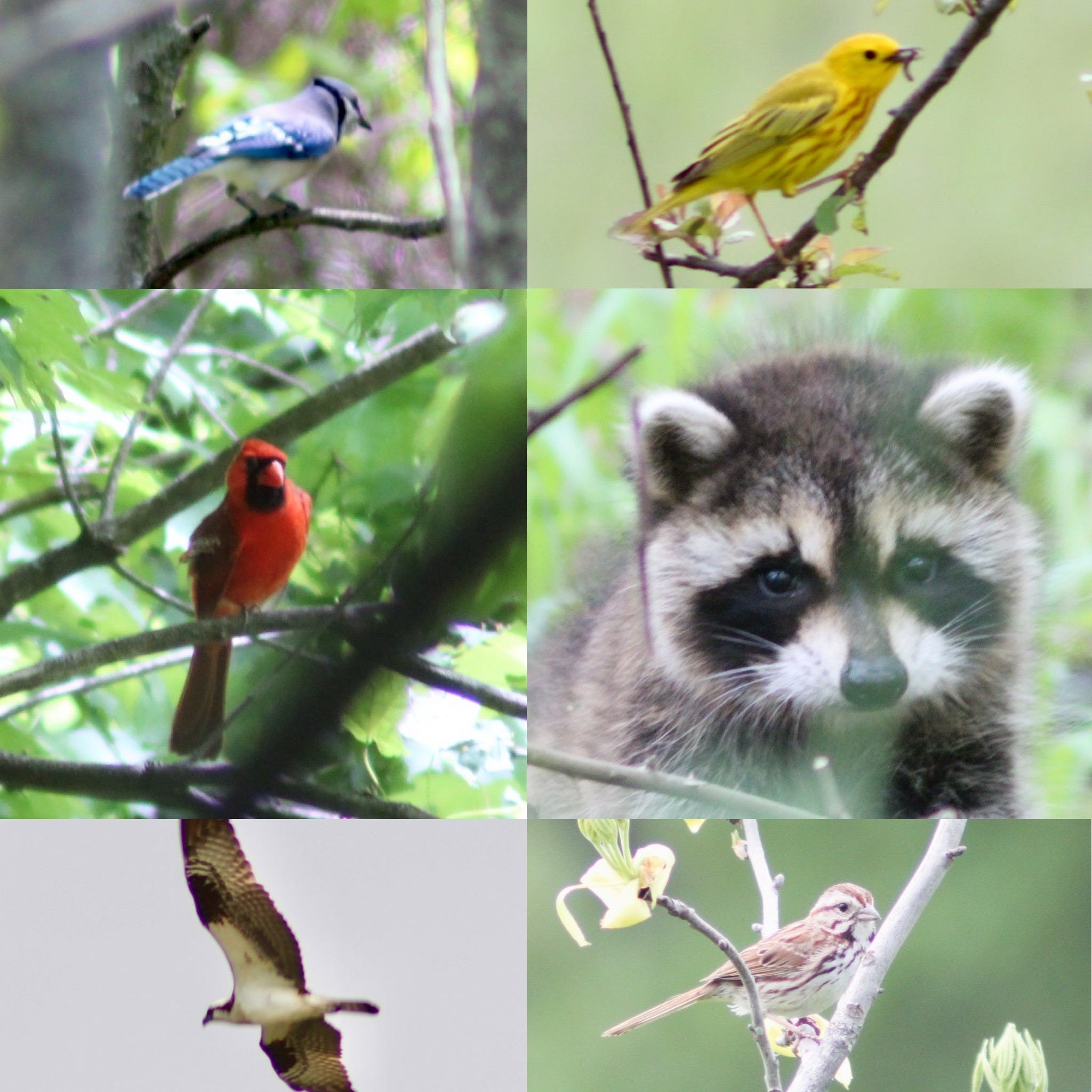
Learning the names of birds feels like a small way to divest from the social media feed. I recently finished reading Enough is Enough: Degrowth, Capitalism, and Liberation Theology by Matthew Bernico and Dean Dettloff along with cracking open Mutual Aid by Dean Spade, so I’ve been deeply immersed in questions about the systems in which we live.
There’s a meme about systems; it’s a cartoon panel of a medieval peasant carrying a bushel of sticks on their back with the speech bubble, “We should improve society somewhat.” Next to the peasant, a man pops out of a nearby well with a cheeky grin and says, “Yet you participate in society. Curious! I am very intelligent.”
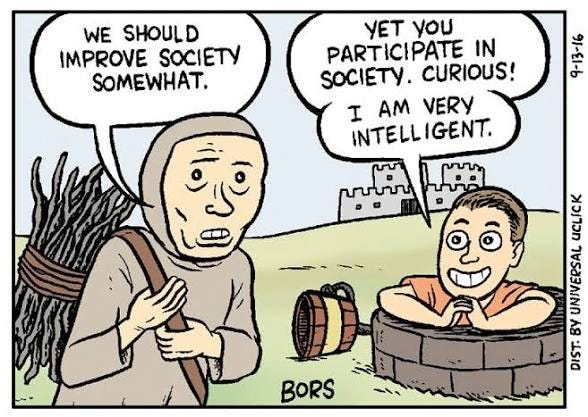
This is one of the core issues at the heart of capitalism. We suffer from its excesses, yet we are also forced to participate in it. Capitalism, as Bernico and Dettloff argue, is constructed around the fantasy of infinite growth. Growth is the goal, growth by any means necessary.
The problem is our finite planet.
You may know that I live on a hobby farm. We have horses, a mini donkey, chickens, rabbits, lots of neighborhood barn cats, and three dogs. There’s lots of space to think out here, and plenty of opportunities to get your hands and feet muddy. I can jump on my bike and go thirty or forty miles largely on gravel roads. It’s beautiful, and I’m grateful for it every day, even when my paycheck barely stretches enough for rising grocery prices and gas to also cover horse feed. There is a peace, beauty, and simplicity to my life that is profoundly calming and stabilizing.
The peace I enjoy here helps give me the bandwidth to think outside the box. I’ve been able to explore liberation theology, question the mechanisms of capitalism, and ask what a healthy community sustained by the mutual aid efforts of the members would actually look like. I’ve had the time, focus, and interest to read what Pope Francis wrote about the poor and the environment in Laudato Si’, his second encyclical, on care for the earth. There is power in the way he centers the people most impacted by systemic oppression, though he wasn’t a perfect advocate for the marginalized—he understood the basics, like in his fourth and final encyclical, Delixi Nos (He loved us) when he points back to Matthew 25:40 and “the least of these.”
It’s not just “kindness” or “charity towards the less fortunate” that is being asked of us. Pope Francis famously met with transgender women in Rome who were sex workers — stereotypical “sinners,” the type of people you’re “supposed” to minister to (like Sister Luisa said in our recent podcast conversation). But pastoral ministry includes everyone, and it meets people precisely where they are, respecting their identity and language, refusing to impose a top-down “Western civilization” perspective. Our lives as Americans are a colonial project, continued in the construction of massive data centers around the country that drain both human drinking water and the energy from grids that citizens rely on to heat their homes and cook their food, while the intangible AI bubble continues to dangerously swell the unstable economy.
Infinite growth. Finite planet.
So what does it mean to step out of sync? To reject “business as usual?”
I think it means finding your own thing. You know, that thing you do that doesn’t seem like much but always brings a smile to your face. Like when do a favor for your elderly neighbor. Or when you chat with the cashier at the grocery store. When you share the little you have with another. When you give someone a ride while their car is in the shop. Sometimes it’s doing something for another person, and sometimes it’s receiving help.
We are all tangled up together in this thing called life.
And these small actions that seem like nothing (and that you can’t post on social media) are really, truly what make the world go around.
Thanks for being here. I’ll see you next week.
LOVE the picture you took on Memorial Day!!!! And completely agree with the premise of this piece......humanity will begin to heal by the small acts of beauty, kindness, and love that each of us do every day.
This planet will not
be healed
by powerful politicians
in big cities
who spend trillions
on a global strategy
that never quite begins.
They also burn
much fuel.
Earth will be healed
by villagers
who sing,
by backyard gardeners
like you,
who walk more slowly
right here,
who feel the green
through bare soles,
speaking fewer words,
cradling
each others anger
like mothers,
awakening
the heirloom seeds
of the heart.
— Alfred K. LaMotte
Thanks, I needed to read this.
We have been trying to attract bluebirds to our new feeder designed for them. They are around for sure, but haven’t used it yet. We built some bluebird nesting boxes this spring, but I think I put them up a bit late. Hopeful for next year. A nuthatch has built their stick like nest in one, so at least it’s being used:)
Yes, these small joys and hopes hold me and my family together.