
The Thread You’re Afraid to Pull

For some of us, there is a heaviness around holidays. They are a time when the absence of acceptance, the presence of judgment, and the lingering echoes of conditional love become unmistakably clear.
How many chances do you give to someone who has hurt you? What if that person is related to you? What if the central issue between you and the other person is that they do not treat you and your identity with basic respect and dignity, preferring instead to cast you as the agitator and troublemaker?
To me, it has always felt as though it requires more effort to use the wrong pronouns (or nouns) to describe someone or your relationship to them—but, bullies are more than willing to expend the effort to inflict harm, regardless of the long-term damage. And so, one is left to pick up the fragments, to ask how to make sense of someone who claims to love you and prays for you while smearing you behind your back, aligning themselves with deeply exclusionary views on the dignity of human beings.
I have spent considerable time attempting to understand what motivates people to hold onto extreme devotion to rigid thinking in the name of faith. How does one progress from acknowledging a loving creator and savior to embracing violence toward those who do not agree with them or resemble them? I’m afraid I know the answer—it was never truly about the life or teachings of Jesus. Religion becomes merely an excuse. Faith should encourage compassion, curiosity, and spaciousness, not cruelty. Some individuals use faith to make themselves feel superior, to assert that they are “right.” Which for me is ultimately sadder—their cruelty is nothing more than a desperate attempt to bolster their own self-regard, but it leaves them chasing a diminishing high.
But people are hurt by these dynamics. I remain scarred by others’ attempts to shape me into a form that fits their script. I was never adequate by their standards, so why should I now continue to contort myself to meet their expectations?
Instead, why not reflect on the story of the one sheep who was lost, so precious that the shepherd left the flock to seek it out? Or indeed to the story of Jesus, who drew massive crowds yet sought out the social outcasts, the sick, and the suffering? He would not recognize or justify a Christianity aligned with the empire. He was a brown-skinned man executed by imperial authority.
Facing reality entails confronting deeply ingrained conditioned responses. The phrase “Catholic guilt” does not arise spontaneously. It can be observed in midwest homes, in families striving to provide private Catholic education for their kids, where clergy and teachers emphasized the letter of the law, not its spirit. I knew many loving and generous individuals… who no longer engage with me because I am transgender.
Even now, many encounter my work with interest, then reject it based solely on my identity, refusing to engage with any of the actual arguments. The lack of integrity in these individuals has deeply undermined their message—they exist in small worlds where openness is perceived as threatening. Many queer and transgender individuals are intimately familiar with this terrain—conditional love, affection that evaporates when one steps into their truth.
There is a song from the animated TV series Steven Universe that resonates with me deeply:
“I don’t need you to respect me, I respect me. I don’t need you to love me, I love me. But I want you to know you could know me, if you change your mind.”
These words carry additional weight when spoken by an adult who has learned to construct a life without awaiting reluctant approval. There are numerous aspects of my identity beyond my gender, yet until my identity ceases to be a barrier for others to treat me with love, kindness, and openness, I am not able to fully share myself. I will not conceal something so life-giving because others cannot accommodate it.
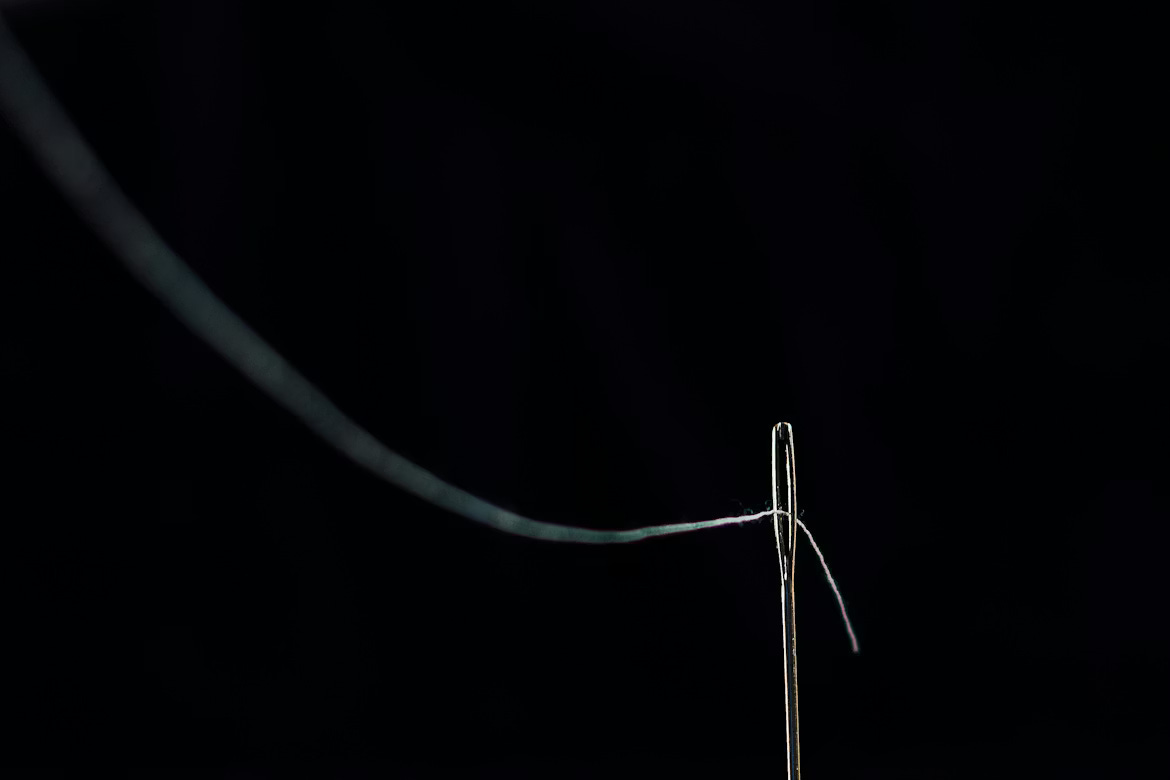
Many systems of coercive control rely upon one’s willingness to participate or permit their continuation unchallenged. Yet what might happen if one steps out of line? If one tugs at the loose thread and unravels the stitching? Some structures may collapse, but what emerges instead may be far more sustaining.
So, here is my prayer. Let your faith be sufficiently robust to tolerate questions and embrace openness. Dismantle hierarchies, perfectionism, and rigid checklists. Step out of the relentless pursuit of performance and experience what it is to encounter another human being fully. These encounters are the mirror image of approaching the altar and receiving the Eucharist. Jesus is present.
I am unafraid to affirm that I have found him within my transgender identity as well. If God became human, then every sincere human encounter is sacred. If holiness is found in truth and honesty, then my identity is not peripheral to my faith—it is a place where grace has revealed itself most vividly.
Beautiful. I am so grateful for you, and all others, who have, against the odds, made a choice to stand in your own dignity. Because of this, you are able to share with the world your gifts which would otherwise be eaten up by those who try to control out of their own insecurity. Thank you, thank you, thank you.
The last time paragraphs describe for me the Christian faith as Jesus would have us live it. Great piece, Max! Thanks!