
Why Everyone Is Talking About the SSPX Schism

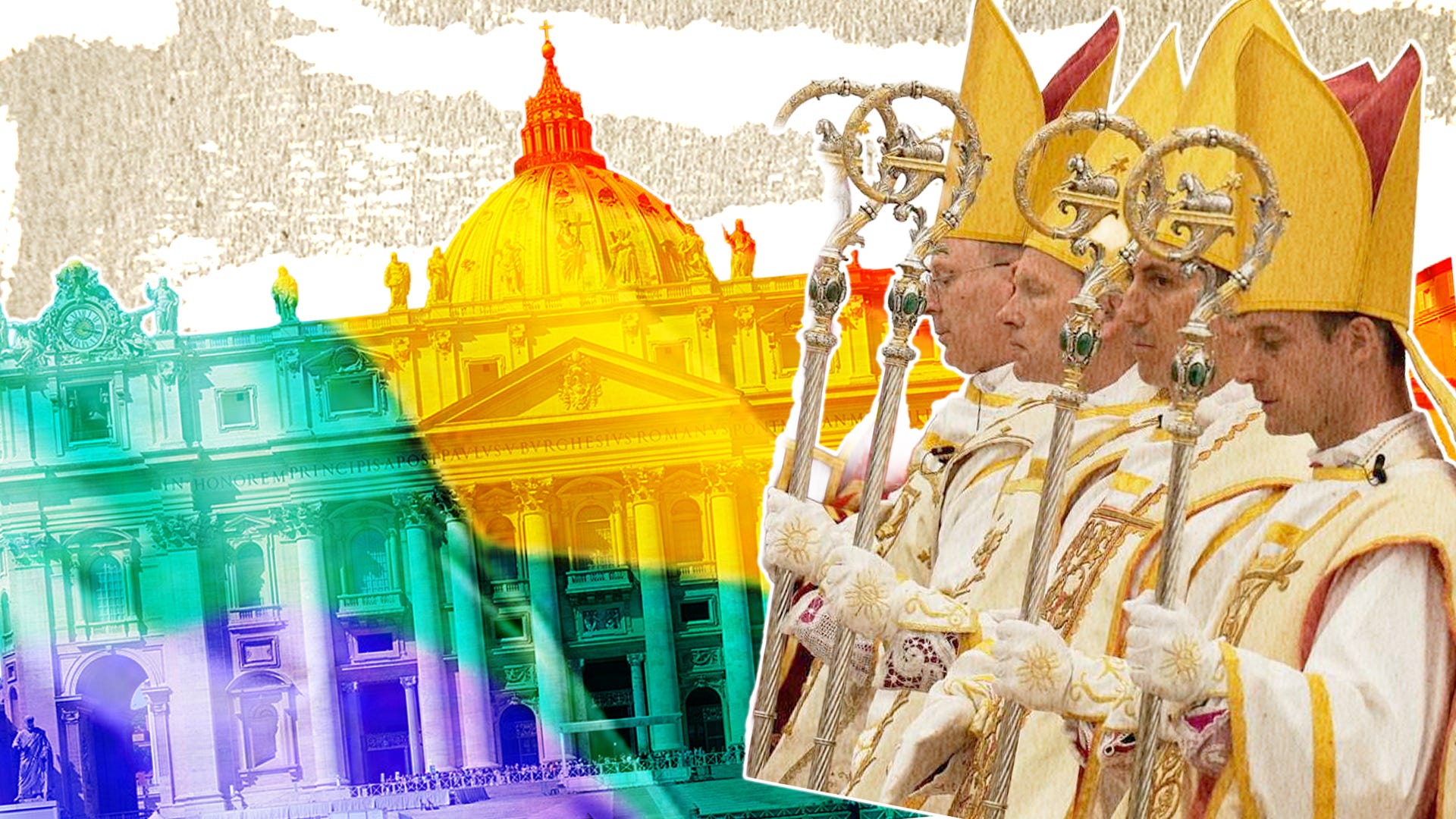
On July 2, 2026, the Vatican formally declared the Society of Saint Pius X (SSPX) to be in schism after the movement consecrated four bishops in Écône, Switzerland without a papal mandate. The decree from the Dicastery for the Doctrine of the Faith marked the culmination of more than fifty years of increasingly strained relations between Rome and the traditionalist society founded by Archbishop Marcel Lefebvre in 1970. While Popes John Paul II, Benedict XVI, and Francis each pursued different avenues toward reconciliation, the unauthorized episcopal consecrations represented, in the Vatican’s judgment, a definitive rupture in ecclesial communion.
Within hours, however, much of the online Catholic conversation had moved somewhere else entirely.
Rather than asking what schism is, why the consecration of bishops carries such profound ecclesiological significance, or why the Church treats communion with the pope as foundational to Catholic identity, many of the most widely shared discussions and memes revolved around a different question: If the SSPX can be declared schismatic, why isn’t someone like Fr. James Martin?
This comparison illustrates something critical about the personal identity of many Catholics today.
Over the past several decades, American political life has increasingly been described through the language of the “culture war.” The phrase was popularized by sociologist James Davison Hunter in his influential 1991 book Culture Wars: The Struggle to Define America, where he argued that American public life was no longer characterized simply by disagreements over individual political issues, but by competing moral worldviews. These conflicts were not merely about abortion, sexuality, religion, or education as isolated debates. They reflected fundamentally different visions of what America had been, what it should become, and who had the authority to define its future.
Political rhetoric soon amplified this framework. Pat Buchanan’s widely publicized speech at the 1992 Republican National Convention declared that the United States was engaged in “a cultural war...for the soul of America,” helping transform Hunter’s sociological concept into one of the dominant narratives of American politics. Since then, researchers have argued that culture wars are sustained not simply by ideological differences, but by feedback loops between political leaders, media organizations, and, increasingly, social media, each reinforcing the perception that society is divided into opposing moral camps.
…Sounds a lot like this concept of pitting the SSPX vs LGBTQ rights!
Rather than first asking why the Church distinguishes schism from other forms of disagreement, many Catholics immediately compared the Vatican’s decision to figures they already associated with the opposite side of the Church’s internal culture wars. The assumption was that the Vatican had made an ideological judgment between conservatives and progressives.
So wait… what exactly is the Society of St. Pius X?
For context, the Society of Saint Pius X was founded in 1970 by French Archbishop Marcel Lefebvre during the turbulent years following the Second Vatican Council (1962–1965). Vatican II introduced some of the most significant reforms in modern Catholic history, encouraging liturgical renewal, greater participation of the laity, ecumenical dialogue with other Christian communities, improved relations with Judaism and other religions, and a renewed engagement with the modern world.
For Lefebvre, however, these reforms were a dangerous challenge to his vision for the Church.
Although the SSPX is often publicly associated with the Traditional Latin Mass, its disagreements with Rome have always extended far beyond questions of liturgical preference. The society has consistently rejected significant theological developments associated with Vatican II, particularly the Council’s teachings on religious liberty (and the idea that salvation exists outside the Church), ecumenism, collegiality, and the Church’s relationship to contemporary society.
Over the following decades, the SSPX developed an extensive international network of seminaries, schools, chapels, retreat centers, and religious communities. In places such as St. Marys, Kansas, it fostered not merely an alternative liturgical practice but an entire parallel Catholic culture organized around the conviction that the post-conciliar Church had fundamentally departed from authentic Catholic tradition.

Relations between the Holy See and the SSPX have remained canonically complex for decades. The movement’s first major rupture occurred in 1988, when Archbishop Lefebvre consecrated four bishops without the approval of Pope John Paul II, resulting in automatic excommunications and the apostolic letter Ecclesia Dei.
Pope Benedict XVI later lifted those personal excommunications in 2009 as part of an effort toward reconciliation, while Pope Francis extended certain pastoral faculties to SSPX priests during the Jubilee Year of Mercy and beyond. Yet these gestures never resolved the underlying ecclesiological disagreements concerning authority, Vatican II, and the governance of the Church.
The unauthorized episcopal consecrations carried out in Écône on June 30, 2026 ultimately marked the definitive collapse of those decades-long reconciliation efforts.
What is schism?
One consequence of contemporary Catholic discourse is that schism has increasingly become a rhetorical label applied to anyone perceived as departing from orthodoxy. Historically and canonically, however, the term has a much more precise meaning.
Schism does not simply refer to disagreement with Church teaching, public controversy, or even theological error. Rather, it concerns the rupture of ecclesial communion through the rejection of legitimate ecclesiastical authority.
As Jesuit theologian Fr. Thomas Rausch recently explained to NPR, schism occurs when someone has “broken communion with the Church” by rejecting the authority through which the Church is governed.
Catholic theology has long differentiated between personal sin, doctrinal error, heresy, disciplinary disobedience, and schism. These categories are neither interchangeable nor merely semantic. They reflect different kinds of relationships to the life and authority of the Church.
The unauthorized consecration of bishops occupies a uniquely significant place within this framework because bishops are not simply administrators. They stand within apostolic succession and exercise authority in communion with the Bishop of Rome. To consecrate bishops explicitly against papal authority is therefore not merely an act of disobedience; it establishes a competing structure of ecclesial authority.
Conclusion
The culture war mentality trains us to see every controversy as a contest between opposing camps. Every decision becomes a victory or defeat. Every statement is interpreted as support for one side or condemnation of the other. Before long, we begin to imagine that the Church exists primarily to declare winners and losers in our ideological battles.
It is true that the Church certainly has structures of authority. It has canon law, bishops, councils, and theological traditions that govern how it understands communion and how it orders its common life. Questions about schism belong to that reality. They concern the integrity of the Church’s sacramental and ecclesial communion.
Throughout the Gospels, Jesus draws people to his table before they understand everything, before they agree on everything, and often before they have changed anything at all. His ministry consistently resists the temptation to sort people into camps worthy of belonging and camps beyond redemption. The Church’s canonical judgments about authority were never intended to become a substitute for that evangelical witness.
Perhaps, then, the deeper question raised by the SSPX schism is not simply whether the Vatican acted correctly, but why so many Catholics instinctively interpreted the decision through the logic of the culture war in the first place. Why have we become so accustomed to asking who is “winning” or “losing” that we struggle to recognize when the Church is asking an entirely different question?
The Church is at its best when it refuses to mirror the polarization of the societies in which it exists. It will always have difficult conversations about doctrine, authority, and communion. But those questions should never eclipse the Gospel’s equally persistent call to hospitality, mercy, and encounter.
Recovering that distinction may not only help us understand one of the most significant canonical decisions of recent years—it may also help us imagine a Catholicism that is less captive to the culture war and more faithful to the expansive welcome of Christ.